7 Aug 2026
Tracing how global economic shifts reshape subscription viability for competitive sports forecasting platforms
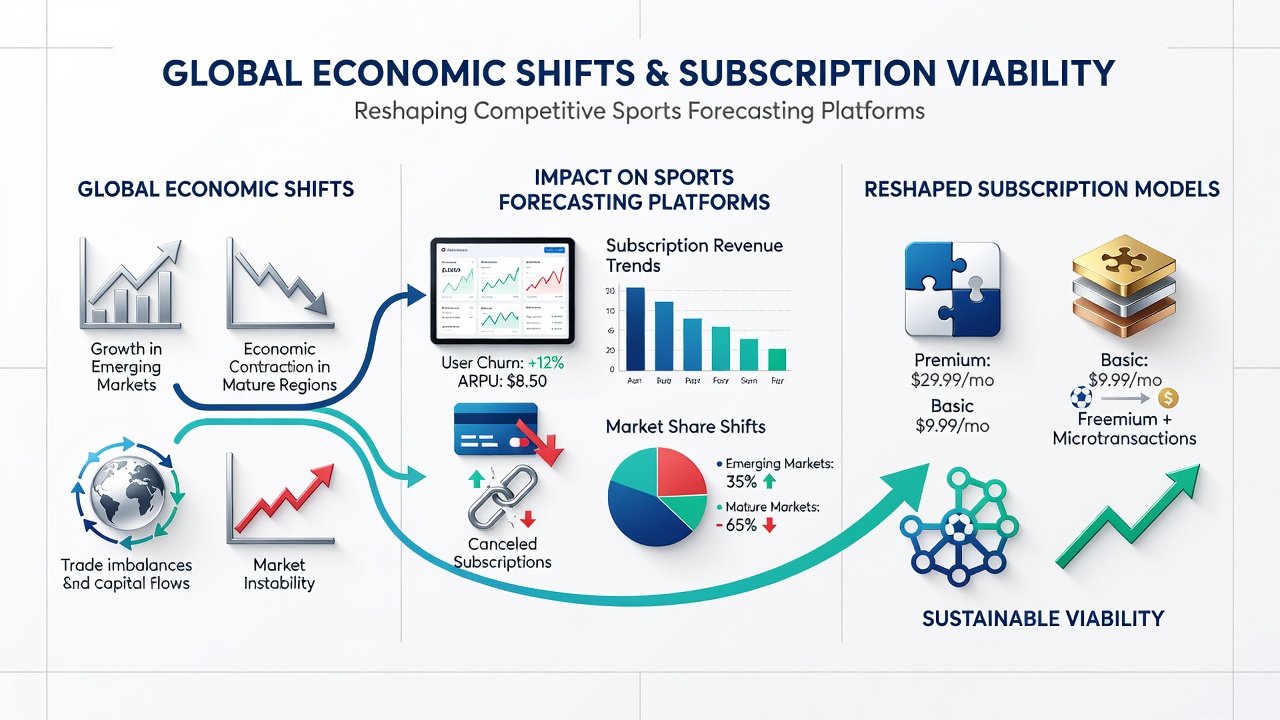
Global economic shifts continue to influence subscription models for competitive sports forecasting platforms, where data analytics and predictive algorithms drive user engagement in soccer, basketball, and tennis markets. Inflationary pressures, currency volatility, and changes in household spending patterns alter how consumers allocate funds toward premium forecasting services that once relied on steady monthly or annual commitments.
Economic indicators and consumer spending patterns
Central banks across multiple regions adjusted interest rates throughout 2025, and those moves coincided with slower growth in discretionary service subscriptions. Data from the OECD shows household savings rates climbed in several developed economies during the first half of 2026, while spending on entertainment and information services declined by an average of 7 percent year-over-year. Competitive sports forecasting platforms, which depend on recurring revenue, recorded higher churn rates as users evaluated whether predictive insights justified ongoing costs amid rising living expenses.
Researchers tracking platform metrics noted that platforms offering tiered pricing experienced mixed retention outcomes. Lower-cost tiers retained users at higher rates, whereas premium packages that bundled advanced analytics and real-time alerts saw cancellation spikes when regional currencies weakened against the US dollar. In August 2026, several major forecasting services reported that European and Asian subscribers reduced upgrade frequency compared with the prior year, reflecting tighter budget constraints.
Regional variations in subscription resilience
North American markets demonstrated relative stability, supported by stronger employment figures and wage growth in certain sectors. Platforms serving US and Canadian audiences maintained subscription volumes closer to 2024 levels, although conversion from free trials to paid plans slowed. In contrast, platforms targeting Latin American and Southeast Asian users encountered steeper declines, as local inflation outpaced income growth and alternative free prediction sources gained traction.
Academic studies from institutions such as the University of Melbourne examined how currency fluctuations affect cross-border subscriptions. Findings indicated that a 10 percent depreciation in local currency against major trading currencies correlated with a 12 to 15 percent drop in renewal rates for international forecasting services. Those patterns prompted some platforms to introduce localized pricing or regional payment partnerships to mitigate losses.
Technology investment and platform adaptation
Many forecasting providers responded by reallocating resources toward automation and artificial intelligence to lower operational costs. Reduced staffing in manual analysis teams allowed some services to maintain margins even as subscriber numbers softened. Industry reports from the International Monetary Fund highlighted that technology-driven efficiencies helped offset revenue pressure in knowledge-based subscription sectors during periods of macroeconomic uncertainty.
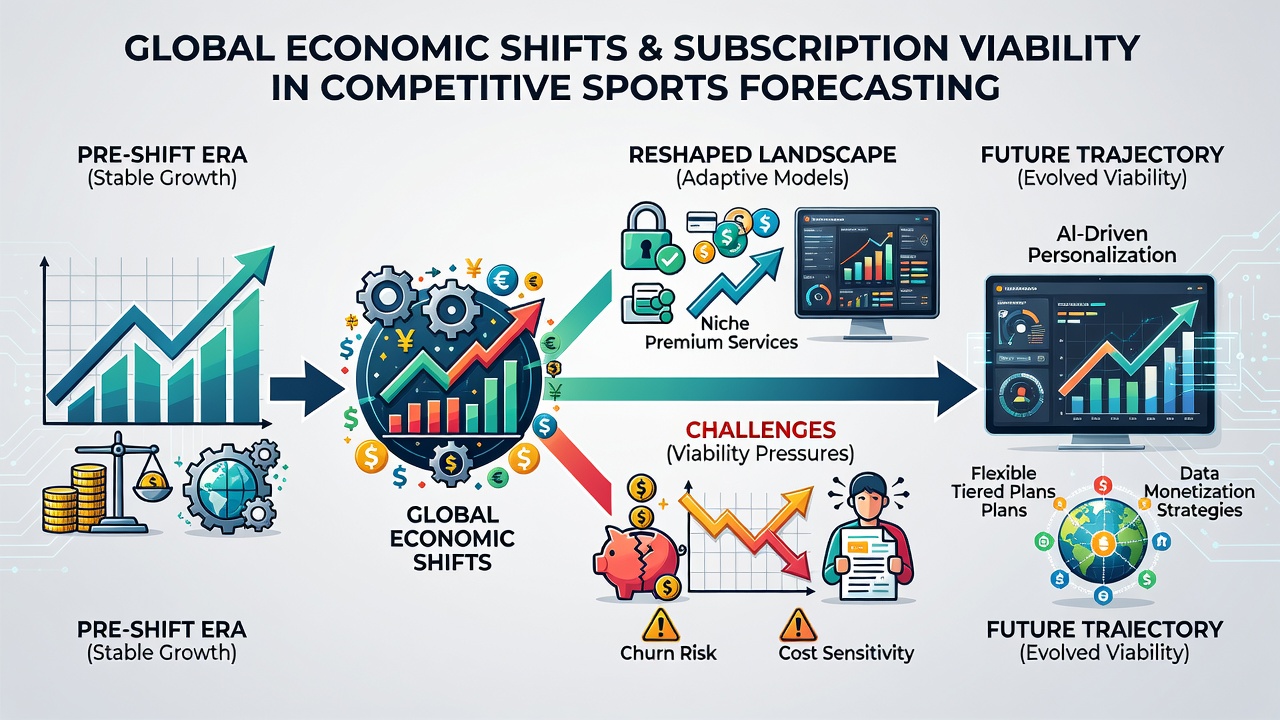
Yet platform operators also faced higher costs for cloud computing and data acquisition. Those expenses rose in parallel with broader digital infrastructure inflation, squeezing profitability for smaller providers that lacked scale. Larger platforms with diversified revenue streams absorbed these increases more effectively, while niche services specializing in single sports often consolidated or exited certain markets.
Future outlook and strategic considerations
Projections for late 2026 and 2027 suggest continued sensitivity to global trade policies and energy prices. Forecasting platforms that integrate flexible billing cycles and performance-based incentives appear positioned to weather further volatility. Observers note that partnerships with sports leagues for official data feeds may become more valuable as platforms seek differentiation without raising subscriber fees.
Evidence from multiple regions shows that economic recovery timelines vary widely, and subscription viability will likely depend on each platform's ability to demonstrate measurable value during periods of constrained consumer spending. Those services that track user engagement metrics closely and adjust offerings accordingly have recorded steadier retention compared with competitors maintaining rigid pricing structures.
Conclusion
Global economic conditions continue to exert measurable influence over subscription patterns for competitive sports forecasting platforms. Currency movements, inflation differentials, and shifts in household priorities reshape user willingness to maintain recurring payments. Platforms adapting through localized pricing, technological efficiencies, and value demonstration show greater capacity to sustain operations across fluctuating economic cycles.