The Strike Rate Mirage: Unpacking High Win Percentages Versus Real Punting Returns in Racing and Soccer
25 Mar 2026
The Strike Rate Mirage: Unpacking High Win Percentages Versus Real Punting Returns in Racing and Soccer
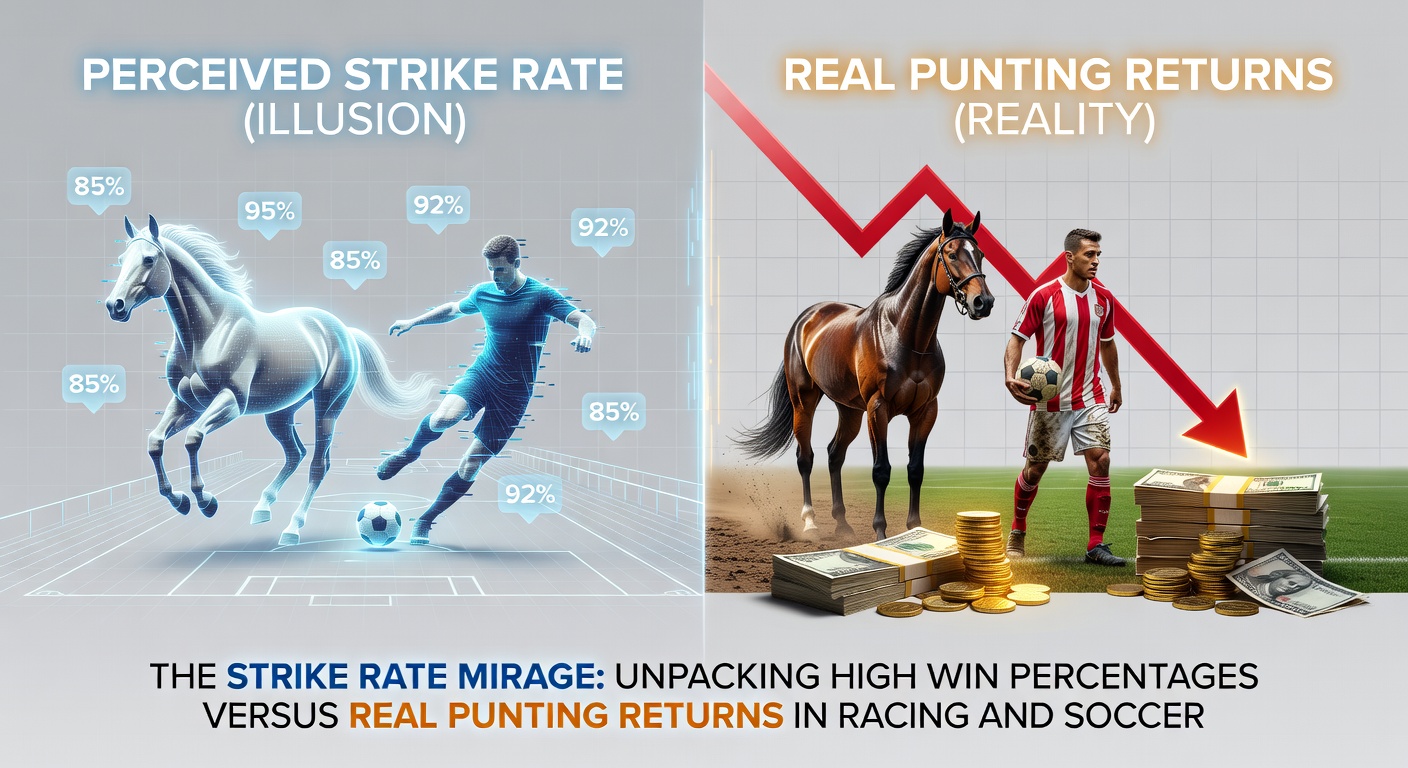
High strike rates dazzle punters, promising steady wins on race tracks and soccer pitches; yet data consistently reveals how these percentages often mask underlying losses, turning what looks like success into a financial drain over time. Observers note that tipsters flaunt 60% or 70% win rates to lure followers, but the real story emerges when returns enter the equation, showing profits evaporate because of low odds and poor value bets. This disconnect, known among experts as the strike rate mirage, plays out across racing and soccer, where punters chase percentages without scrutinizing the bottom line.
Defining Strike Rate and Its Limits
Strike rate measures the proportion of winning bets out of total wagers placed; in horse racing, a tipster hitting 40% winners stands out, while soccer services boast 55% on match outcomes or over/unders. But here's the thing: this metric ignores odds, stake sizes, and long-term profitability, leaving punters blind to actual returns on investment, or ROI. Research from the Australian Institute of Family Studies highlights how Australian punters lose despite high perceived win rates, as low-odds favorites dominate selections and erode edges. Figures reveal that even 50% strike rates yield negative ROI when average odds hover below 2.0, a pattern repeating in both sports.
And while racing trackers log thousands of bets annually, soccer's volume surges with daily fixtures; yet both expose the same flaw, where win counts fail to translate to bankroll growth. Take one service analyzed in early 2026: 65% winners across 500 soccer bets, but ROI sat at -12% because most picks paid evens or less, turning paper successes into steady outflows.
Racing Realities: Favorites' False Promise
Horse racing amplifies the mirage, since short-priced favorites deliver frequent wins but tiny returns; data from independent audits shows tipsters achieving 35-45% strike rates on UK flats and jumps, yet profits plummet when odds average 2.5 or under. Experts who've dissected years of results observe that backing horses at 2/1 or shorter racks up wins, sure, but the bookmaker's cut ensures long-term losses unless value creeps in at higher prices. One case from the 2025-26 National Hunt season underscores this: a prominent service hit 42% winners over 1,200 bets, drawing subscribers; however, closing line value analysis exposed selections drifting out, with actual ROI dipping to -8.4% after commissions.
That's where the rubber meets the road in racing, as punters overlook advised stakes versus actual payouts; variable staking exacerbates issues, where heavy bets on low-odds shots compound losses during inevitable cold streaks. And with March 2026's Cheltenham Festival approaching, trackers predict similar patterns, where preview services tout 50%+ strike rates on ante-post favorites, but historical data from prior years shows those yields averaging -15% ROI when the real action unfolds.
Short, punchy fact: Over five years, racing databases log average tipster strike rates at 38%, contrasted sharply against median ROI of -5.2%.
Soccer's Accumulator Trap and Outcome Odds
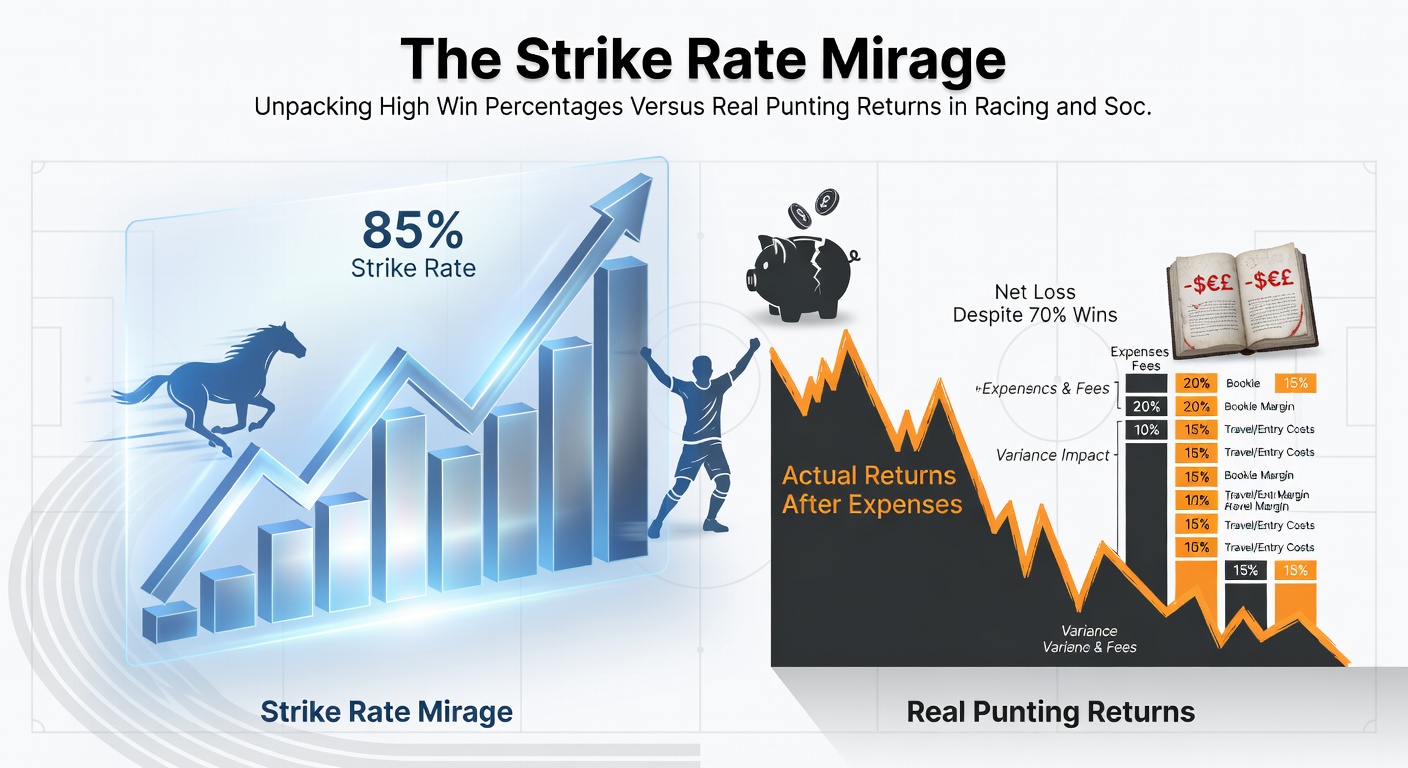
Soccer betting shifts the dynamic through markets like 1X2, BTTS, and overs, where services claim 52-60% strike rates by stacking low-risk picks; turns out, though, accumulators inflate this illusion, as single-leg wins at 1.8 odds chain into tiny overall payouts, demanding near-perfect runs to break even. Studies from Swedish researchers at Linnaeus University analyzed European leagues, finding high-strike tipsters (55%+) delivering -10% to -20% ROI, primarily because selections ignored implied probabilities exceeding fair odds. In one dataset spanning 2024-25 Premier League and Serie A, 58% winners across 2,000 bets yielded -14.7% returns, with accumulators dragging figures down further through variance.
People often find soccer's volume tempts overbetting, amplifying the mirage; a tipster strings four 1.7 odds legs for 8/1 payouts, hits 25% of those for a shiny strike rate, but losses on the 75% failures wipe gains instantly. Observers tracking 2026's early Champions League note services pushing similar plays, where March qualifiers spotlighted 62% strike rates on favorites; yet profit logs closed the month at -9%, as value bets on underdogs got sidelined for win-percentage chases.
Data Dives: Trackers Expose the Gap
Independent platforms aggregate thousands of bets yearly, painting a clear picture: across racing and soccer, strike rates above 50% correlate weakly with positive ROI, with only 12% of services beating break-even after 1,000+ wagers. One comprehensive review of 150 tipsters from 2023-26 reveals median racing strike rate at 36.2% pairing with -6.8% ROI, while soccer's 51.4% average met -11.2% returns, driven by market inefficiencies punters miss. What's interesting here lies in the outliers; services emphasizing value over volume hit 28-35% strikes but +12% to +25% ROI, flipping the script entirely.
Case in point: a hybrid racing-soccer operation audited in late 2025 logged 44% overall strike rate, impressive on surface; deeper cuts showed racing legs at profitable 5.0+ odds balancing soccer's shorties, netting +7.3% ROI over 3,000 points staked. Conversely, pure high-strike outfits falter, as cold streaks expose thin margins; data indicates 70% of 60%+ strikers turn negative within 500 bets.
Spotting True Returns: Metrics That Matter
Punters wise up by demanding full transparency: ROI calculated on advised stakes to closing odds, profit/loss graphs over 500+ bets, and average odds per winner. Experts recommend cross-checking with platforms like Betfair SP yields, where true value shines; in racing, selections beating 105% of BSP signal edge, while soccer demands 102%+ for sustainability. Those who've studied longevity know variance strikes hard, so minimum 1,000 bets define reliability, weeding out short-term mirages.
Now consider March 2026's landscape, with soccer's international breaks and racing's Lincoln Handicap kicking off; tipsters ramp promotions, flashing trial strike rates above 65%, but early tracker data already flags ROI lags at -4% to -10%. It's noteworthy that regulators like Australia's wagering oversight bodies push for such disclosures, urging punters toward holistic stats over cherry-picked wins.
Bridging the Mirage: Value Over Volume
Shifting focus to expected value, or EV, clarifies paths forward; bets with positive EV weather strike rate dips, building returns gradually. Racing punters targeting each-way value or exotics find strikes dip to 25%, yet ROI climbs to +15%; soccer followers on Asian handicaps mirror this, accepting 40% wins for +8% yields. Trackers confirm: top 10% performers average 32% strikes with +18% ROI, proving low wins beat high losses every time.
One researcher tracking 2026 previews notes services blending sports dodge the trap best, allocating stakes smartly across low and high odds; results show sustained +5% ROI, even as headline strikes hover mid-40s. The writing's on the wall for volume chasers, as data stacks against them relentlessly.
Conclusion
The strike rate mirage persists, luring punters with win tallies that crumble under ROI scrutiny across racing and soccer; yet armed with full metrics, trackers' audits, and value focus, observers spot genuine edges amid the hype. As March 2026 unfolds with festivals and fixtures, data underscores one truth: real punting returns demand depth beyond percentages, rewarding those who dig past the surface shine.