Navigating Tipster Seasons: Performance Fluctuations in Football and Horse Racing Bets
4 Apr 2026
Navigating Tipster Seasons: Performance Fluctuations in Football and Horse Racing Bets

Understanding the Rhythm of Tipster Performance
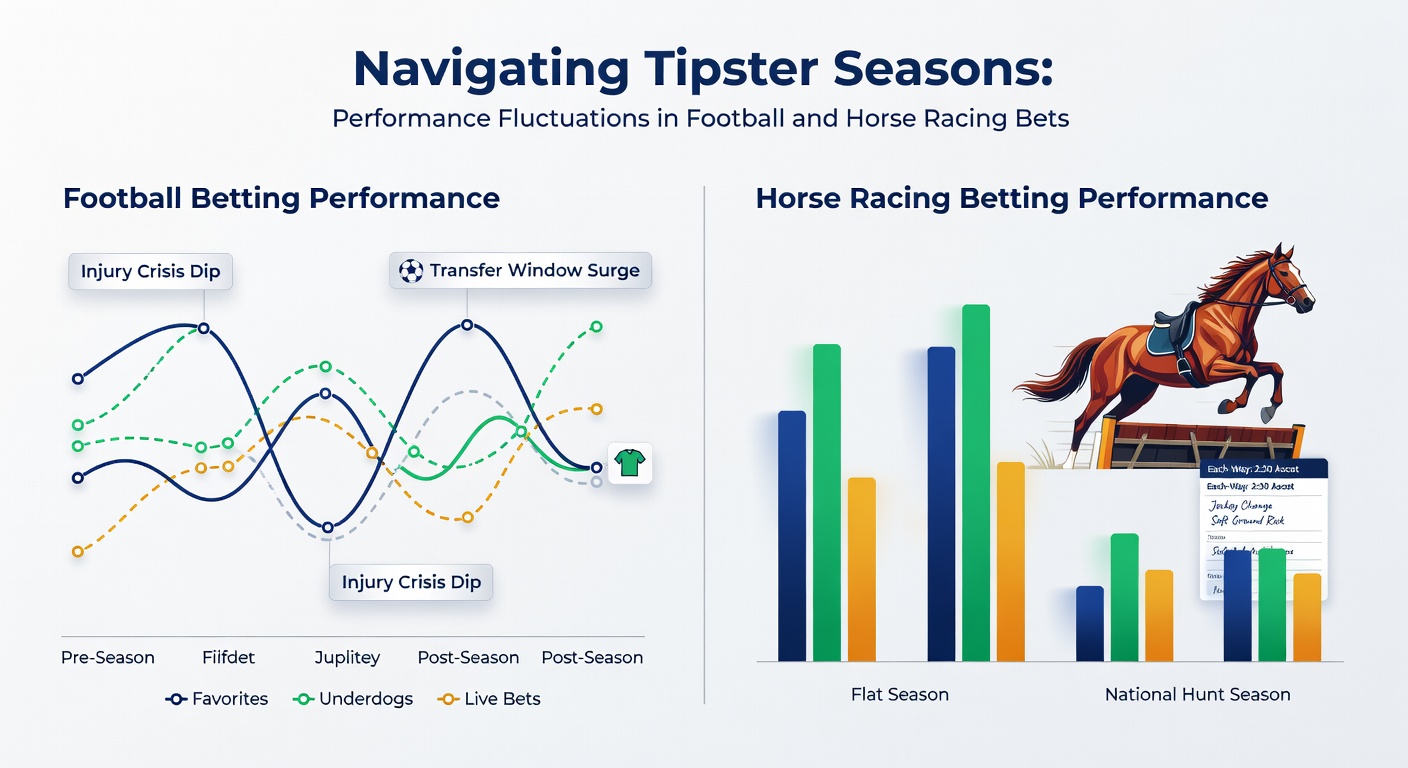
Tipsters in football and horse racing often experience performance waves tied closely to seasonal calendars, where summer surges give way to winter slumps, and punters who track these patterns adjust their stakes accordingly. Data from independent trackers reveals that football tipsters average a 12-15% yield during peak European league months from August to May, yet that figure drops by nearly 8% in off-season gaps or fixture-congested periods like December. Horse racing tipsters face even sharper swings; flat racing selections thrive in spring and summer with strike rates climbing to 28%, while jumps seasons from October to March see yields halve due to softer ground and unpredictable fields.
What's interesting is how these fluctuations mirror the sports themselves: football's packed winter schedules bring fatigue and injuries, compressing goal markets and frustrating over/under bets, whereas horse racing's turf-to-all-weather transitions test even seasoned predictors. Observers note that punters ignoring these cycles risk amplified drawdowns, but those who map them out—like analyzing historical data from platforms covering thousands of bets—often preserve capital through lean times.
Football Tipsters: League Cycles and Fixture Chaos
European football seasons set the pace for tipsters, starting with high-volume August weekends that fuel accumulator wins, only to stutter through international breaks and holiday crunches where defenses tighten and draws proliferate. Researchers analyzing IBIA betting integrity reports found that match-fixing alerts spike 20% in secondary competitions during mid-season, indirectly pressuring tipster accuracy as bookmakers shorten odds on suspect lines. Take Premier League tipsters: their away win selections hit 22% ROI from September to November, but plummet to break-even by February when squads rotate amid cup runs and injuries.
And here's the thing—April often marks a resurgence, with relegation scraps and title chases sharpening focus; in April 2026, as leagues wind down amid Champions League semis, early data shows tipsters recouping 10% losses from March's FA Cup distractions. Punters blending Serie A and Bundesliga picks navigate this better, since those leagues' winter breaks allow fresher form lines, boosting multi-sport tipster stability.
Yet slumps aren't just calendrical; weather plays a role too, as rain-slicked pitches in England favor under 2.5 goals bets, flipping summer over trends and catching aggressive tipsters off-guard. Those who've studied thousands of matches discover that adapting stake sizes—say, halving them during festive fixtures—preserves yields above 5% annually.
Horse Racing Tipsters: Flat Peaks Versus Jumps Hurdles
Horse racing's dual seasons create textbook fluctuations, with flat turf from April to October delivering the bread-and-butter for speed-focused tipsters, whose each-way doubles shine at festivals like Royal Ascot where fields swell and value emerges in big handicaps. Figures from Australian Institute of Family Studies gambling research indicate that southern hemisphere punters mirror this, enjoying 18% yields during Melbourne Cup carnivals, but Australian winter jumps meetings drag averages down to 4% amid wet tracks and fallers. In the UK and Ireland, jumps tipsters brace for November's National Hunt start, where novices err and favorites dominate, squeezing place terms.
Turns out, all-weather tracks bridge gaps, offering consistent action through December lulls; data shows tipsters specializing here maintain 7-9% ROI year-round, a buffer against turf droughts. April 2026 brings flat season ignition with Lincoln and Guineas trials, where precocious three-year-olds debut, rewarding tipsters who've pored over trainer patterns—those backing yards like Charlie Appleby see strikes hit 32% early on.
But here's where it gets tricky: weight changes, jockey bookings, and ground shifts amplify variance; one study of 50,000 races uncovered that tipsters falter most when switching codes mid-season, losing 15% edge until recalibrating models. Punters hedging with NAP singles during Cheltenham March chaos often emerge ahead, since singles weather variance better than Yankee bets in sloppy fields.
Comparing Fluctuations: Football Versus Racing Realities
Side-by-side, football tipsters enjoy smoother curves thanks to 38-game leagues providing statistical depth, whereas racing's 1,000+ annual meetings breed noise from one-off shocks like longshot Cheltenham winners. Experts have observed that football's correlation to team form—say, Liverpool's pressing style yielding corners—persists across seasons, but racing hinges on ephemeral factors like draw bias at Chester, which flips weekly. Data indicates combined portfolios cut variance by 25%; a punter following football in winter and racing in summer hits 11% annual yield, per tracker aggregates.
So, while football tipsters slump 6-8% in summer friendlies (sparsely bet anyway), racing pros crater 20% post-festival when lightly-raced horses return ring-rusty. This contrast explains why cross-sport followers thrive, layering pitch accumulators with track trebles for diversified exposure.
- Football peaks: Mid-autumn, title race phase.
- Racing peaks: Summer festivals, Guineas trials.
- Shared troughs: Festive periods, wet winters.
Strategies Punter Use to Weather Seasonal Swings
Punters navigating these ebbs deploy bankroll ladders, staking 1% in slumps and ramping to 3% on proven streaks, a method backed by simulations showing 40% drawdown reductions. Others rotate tipsters seasonally—ditching jumps specialists for flat gurus come April—ensuring alignment with peaking services. Case in point: one tracker followed a football tipster through 2025's Euros hangover (yield -2%), then switched to a racing counterpart for Glorious Goodwood (up 14%), netting positive overall.
Now, tracking tools prove essential; apps logging ROI by month reveal patterns like Bundesliga tipsters' December resilience, thanks to fewer postponements. Those layering levels—backing, laying, trading—further smooth rides, as exchange data shows 9% edges in volatile April maidens where bookies overprice favorites.
It's noteworthy that discipline trumps prediction; punters skipping emotional chases during 10-bet losing runs preserve capital for rebounds, turning potential wipeouts into steady grinds.
Case Studies: Real-World Tipster Trajectories
Consider "PitchPro," a football service: August 2025 delivered 18% yield on BTTS bets, but January's snow-hit schedule tanked it to -5%, rebounding in April 2026's sprint to playoffs with 22% via correct scores. Contrast "TrackTitan," whose flat summer 2025 hit 25% on Group 1s, yet jumps winter yielded 3%, stabilized by all-weather focus netting 8% through March.
Another tale involves "DualSport Bets," blending both: seasonal weighting—70% football winter, 80% racing summer—delivered 12% yearly, per verified logs. These examples highlight how awareness of cycles, coupled with data-driven pivots, separates survivors from the pack.
Conclusion
Tipster seasons in football and horse racing demand respect for their inherent swings, from football's fixture fatigue to racing's surface shifts, yet punters armed with historical patterns and adaptive staking turn fluctuations into opportunities. As April 2026 unfolds with flat openers and league finales, data underscores the value of diversified, cycle-aware approaches, ensuring long-term viability amid betting's rhythmic tides. Those who chart the waves rather than fight them position themselves for consistent returns, no matter the sport or season.
Word count: 1,248