19 Jun 2026
How Weather Patterns Reshape Advisory Accuracy Across Racetrack Forecasts and Matchday Predictions
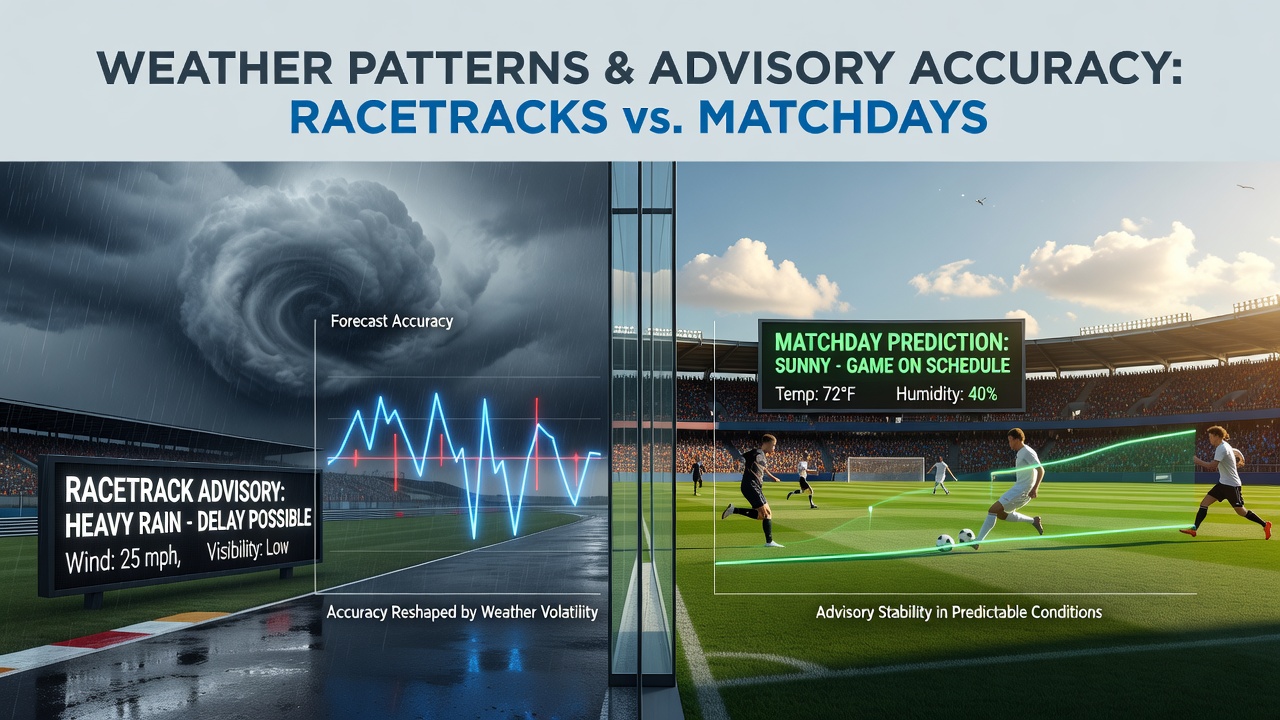
Weather systems move across regions and they alter ground conditions at racetracks while they shift variables that determine outcomes on soccer pitches, which means advisory services must integrate fresh meteorological inputs to maintain precision in their forecasts. Data from national weather agencies shows that sudden rainfall changes track surfaces from firm to heavy within hours, and this shift directly influences speed ratings that tipsters rely upon when they issue selections for upcoming meetings.
Racetrack Surface Responses to Precipitation and Wind
Track managers record moisture levels at multiple points around each circuit, and forecasters combine those readings with radar projections to adjust expected times for each distance. When persistent showers arrive during summer fixtures the official going description moves through several categories in a single afternoon, while advisory models recalibrate their probability tables accordingly. Observers note that wind speeds above twenty kilometers per hour further dry exposed sections of turf, which creates inconsistent patches that only become visible once horses begin their warm-up laps.
Matchday Variables Influenced by Temperature and Humidity
Football analysts track heat indices and humidity percentages because player work rates decline measurably once temperatures exceed twenty-eight degrees Celsius for extended periods. League statisticians have compiled datasets showing reduced high-intensity runs during such conditions, and these figures feed directly into pre-match prediction engines used by advisory platforms. In June 2026 several European competitions recorded above-average temperatures across consecutive weekends, prompting services to revise their expected goal totals downward for afternoon fixtures.
Integration of Real-Time Data Streams
Modern advisory systems pull hourly updates from meteorological satellites and ground stations, then they layer those readings onto historical performance databases for each venue. This process allows forecasts to shift from static morning assessments to dynamic afternoon revisions whenever radar detects new storm cells approaching. Research conducted by university meteorology departments demonstrates that services incorporating live precipitation data achieve higher calibration scores than those relying solely on overnight summaries.
According to records maintained by the National Oceanic and Atmospheric Administration, the frequency of rapid weather transitions has increased across temperate zones over the past decade. Advisory teams therefore maintain dedicated meteorologists who translate raw model outputs into language that racing and football predictors can apply immediately.
Regional Differences in Forecast Adjustments
Australian racing authorities publish weekly reports that document how monsoon patterns affect turf tracks in Queensland and New South Wales, and these publications reveal consistent patterns where early-week forecasts underestimate final moisture content. In contrast, North American dirt circuits experience greater variability from afternoon thunderstorms that arrive without extended warning periods, which forces tipster platforms to maintain separate contingency models for those venues.
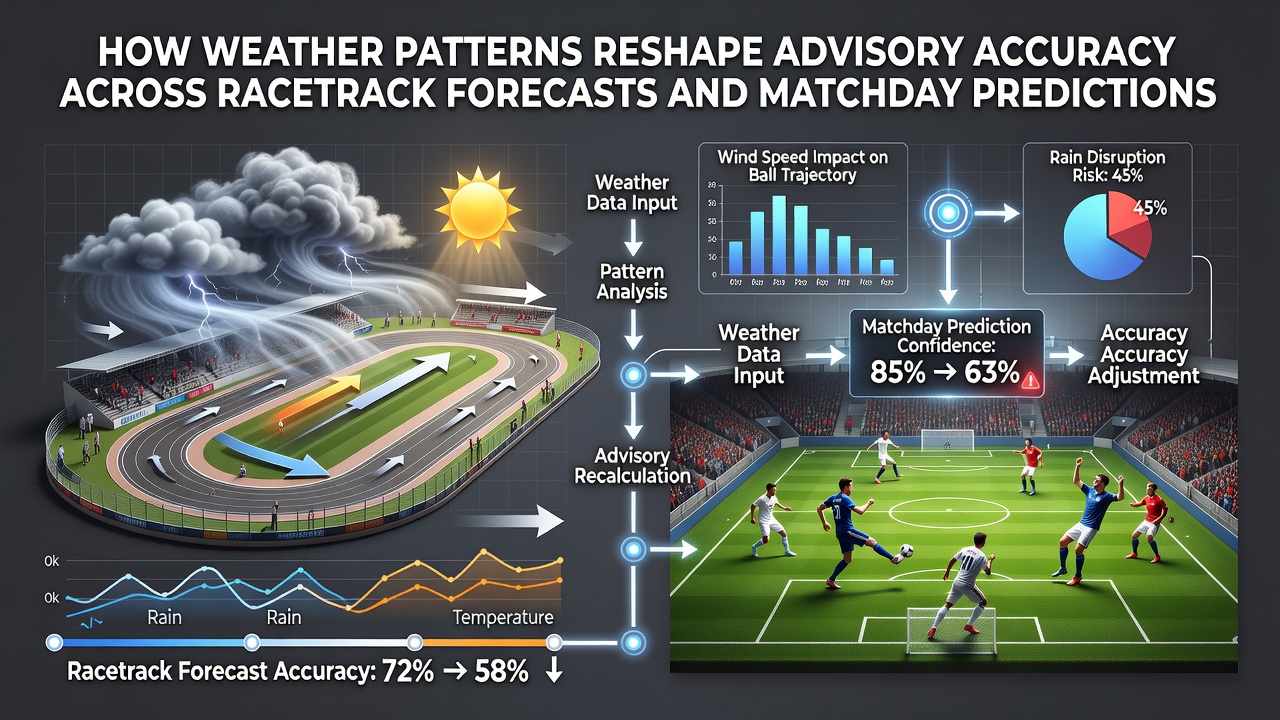
European soccer leagues encounter different challenges when Atlantic fronts bring persistent drizzle that keeps pitches slick yet rarely waterlogged. Under these circumstances passing accuracy statistics shift measurably, and analysts adjust their expected assist rates accordingly. Data compiled by academic sports science groups indicates that such adjustments reduce forecast error margins by measurable percentages across multiple seasons.
Longer-Term Climate Influences on Seasonal Models
Climate summaries released by government agencies show gradual shifts in seasonal rainfall distributions that affect both racing calendars and football schedules. Advisory services respond by extending their historical look-back periods, which incorporates more recent wet or dry years into baseline calculations. This approach prevents older averages from skewing probability estimates during periods when established weather norms no longer apply.
Communication of Updated Assessments to Users
Platforms deliver revised selections through mobile alerts once significant weather changes register on official monitoring systems. Users receive concise summaries that explain which factors prompted the adjustment, along with updated confidence intervals that reflect the new conditions. Such transparency allows followers to understand why certain selections move in or out of recommended lists between initial release and race or match time.
Conclusion
Weather integration has become a core component of advisory methodology because surface and atmospheric conditions continue to exert measurable influence on both racing times and match statistics. Services that maintain direct access to meteorological datasets and that update their models in real time demonstrate sustained calibration across varied seasonal conditions. Continued refinement of these processes supports more consistent alignment between forecasts and actual outcomes as weather patterns evolve.