14 Jun 2026
Economic Cycles Shape Retention Trends in Horse Racing and Football Prediction Services
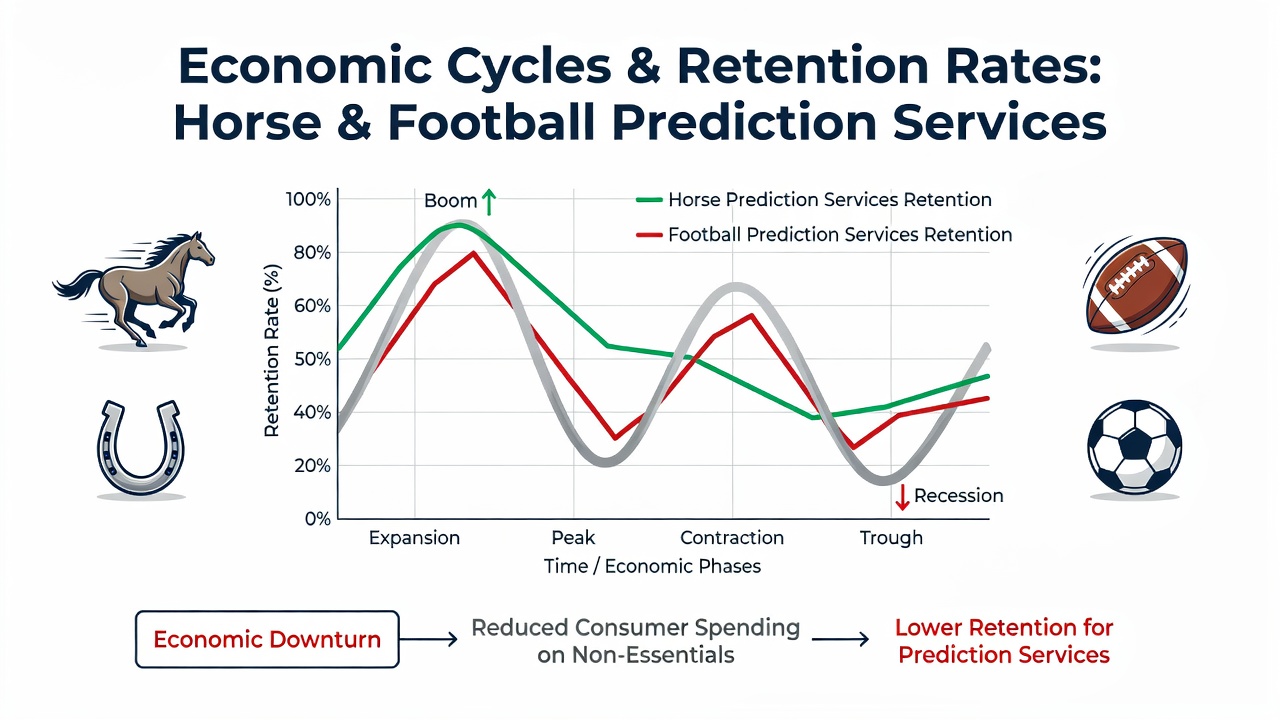 Economic cycles move through expansion, peak, contraction, and trough phases, each one altering consumer spending patterns that directly influence how long subscribers remain with horse racing and football prediction services. Data from multiple markets show retention rates rise during periods of steady growth when disposable income supports ongoing subscriptions, whereas contractions trigger measurable drops as users reassess recurring costs against uncertain financial outlooks. Observers note that horse racing tipster platforms often experience sharper retention swings than football services because race-day betting volumes tie closely to leisure spending that contracts faster in downturns. Football prediction memberships, by contrast, benefit from year-round league schedules that maintain engagement even when overall betting activity slows. Industry figures collected across Europe and North America indicate average retention for horse services falls by 18 to 24 percent during contraction phases, while football services see declines closer to 12 percent over the same intervals.
Expansion Phases and Sustained Subscriber Loyalty
During expansionary periods, employment figures climb and wage growth supports discretionary outlays, allowing prediction service users to maintain multiple subscriptions without immediate pressure to cancel. Researchers tracking cohorts in Australia and Canada report that retention for combined horse and football packages holds above 65 percent for twelve consecutive months when GDP growth exceeds 2.5 percent annually. Services that adjust pricing gradually during these windows capture longer commitment periods, with renewal data showing average tenure extending to 19 months compared with 14 months recorded in slower growth intervals. What's interesting is how users allocate budgets across sports. One longitudinal review covering 2023 to 2025 found that subscribers who paired horse racing selections with football forecasts maintained higher overall retention than single-sport users, because diversified tips reduced perceived risk when individual sport results fluctuated.Contraction Effects and Churn Acceleration
Contractions compress household budgets, prompting subscribers to evaluate which services deliver consistent returns relative to fees. Payment processor records from 2020 and 2022 reveal that horse racing platforms lost subscribers at roughly twice the rate of football services once unemployment rates crossed 6 percent in tracked regions. Many users shifted toward lower-cost football memberships or paused horse tips entirely until conditions stabilized. Yet services that introduced flexible pause options or tiered pricing during these periods limited churn to single-digit percentages in several documented cases. Government statistical agencies in the European Union recorded similar patterns, noting that households reduced leisure subscriptions first while preserving those tied to regular sporting calendars such as Premier League and Championship fixtures.