24 Jun 2026
Digital Echo Chambers: How Online Communities Reinforce Prediction Strategies Across Soccer and Horse Racing Platforms
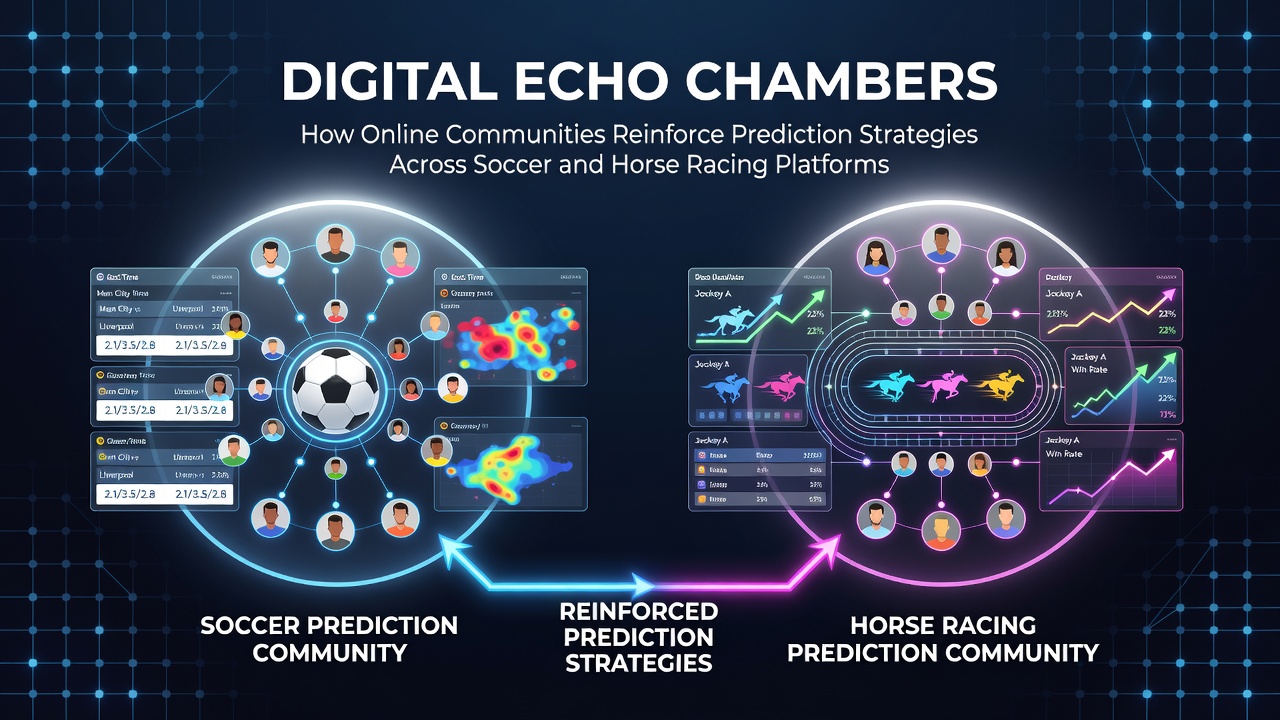
Online communities centered on soccer and horse racing predictions have expanded rapidly through forums, social media groups, and dedicated apps where participants share analyses and forecasts. These spaces often develop patterns where certain strategies receive repeated validation while alternatives fade from view. Researchers at institutions across Europe and North America have documented how algorithmic recommendations and group interactions contribute to this narrowing of perspectives.
Platform Algorithms and Content Reinforcement
Recommendation systems on major platforms prioritize content that aligns with users' prior engagements, which creates feedback loops in betting discussions. When participants interact frequently with posts favoring specific soccer team metrics or horse racing pace figures, similar material surfaces more often. Data from academic reviews completed by mid-2025 indicated that users in these niches encountered 60 to 70 percent overlapping viewpoints within their feeds after several weeks of activity.
Soccer prediction threads commonly emphasize possession statistics and set-piece conversion rates, whereas horse racing groups focus on recent track workouts and jockey-trainer combinations. Once a cluster adopts one approach, dissenting observations about opposing factors receive fewer engagements and drift from visibility.
Group Dynamics in Soccer and Racing Discussions
Participants in these communities exchange detailed breakdowns that reference historical performance data and current form indicators. Over time, consensus forms around particular methodologies, such as weighting recent results more heavily in soccer league matches or prioritizing speed ratings in sprint races. Studies released in early 2026 by research teams in Australia and Canada noted that members who remained active for six months or longer showed measurable increases in adherence to the dominant strategies within their groups.
Moderation practices and upvote systems further shape which contributions gain traction. Threads exploring outlier scenarios, including weather impacts on turf or fixture congestion effects on player output, appear less frequently once core prediction models solidify.

Cross-Platform Information Flow
Users often migrate between multiple sites, carrying reinforced ideas from one environment to another. A soccer-focused Discord server might reference horse racing pace analysis techniques when discussing player stamina, creating unexpected overlaps. Reports compiled by independent research organizations in the United States and Singapore during 2025 highlighted how these transfers strengthen particular frameworks while reducing exposure to broader statistical approaches.
Seasonal events, including major tournaments or championship meetings, intensify activity levels. In June 2026, platform analytics showed spikes in daily posts exceeding 40 percent compared with off-peak months, with the majority clustering around established prediction templates rather than novel variables.
Measurement of Strategy Persistence
Tracking tools employed by academic observers reveal that echo chamber effects correlate with longer retention of specific forecasting methods even after sequences of inaccurate results. Soccer communities demonstrate this through sustained emphasis on expected goals models, while horse racing circles maintain focus on sectional timing data. Comparative analyses from university-led projects in multiple countries found that participants exposed primarily to like-minded sources adjusted their approaches at lower rates than those encountering diverse inputs.
External regulatory bodies in regions such as the European Union and New Zealand have examined these patterns in relation to public information access, noting the role of community structures in shaping available resources.
Conclusion
Digital environments hosting soccer and horse racing prediction exchanges demonstrate consistent reinforcement mechanisms through algorithmic curation and social validation. Evidence gathered from varied geographic sources illustrates how these processes influence the longevity of particular strategies across both sports. Continued observation of platform data and community interactions provides ongoing insight into these dynamics without requiring direct participation.